Review


Structured Review

Procell Inc human osteosarcoma cell line mg63
Biological characterizations of DOX-MSNCaP@PLGA-collagen and PLGA-collagen constructs. The accumulate release of DOX from DOX-MSNCaP@PLGA-collagen in PBS buffer with different pH (A). Cytotoxic assessment of <t>MG63</t> cells after being cultured in scaffolds via live and dead staining. Cells were seed in the meshes and incubated in DMEM at pH 7.4 or pH 6.5 (B). Fluorescence microscopic observation on the intracellular distribution of DOX in MG63 cells after incubation with DOX-MSNCaP@PLGA-collagen scaffolds for 12 hours. Cell nucleus was represented blue fluorescence; DOX was represented red fluorescence; actin cytoskeleton was represented green fluorescence (C). DNA laddering analysis on the severity of DNA fragmentation in MG63 cells upon treatment of DOX-MSNCaP@PLGA-collagen for 12 hours (I: PLGA-collagen at pH 7.4, II: DOX-MSNCaP@PLGA-collagen at pH 7.4, III: DOX-MSNCaP@PLGA-collagen at pH 6.5) (D).
Human Osteosarcoma Cell Line Mg63, supplied by Procell Inc, used in various techniques. Bioz Stars score: 86/100, based on 1 PubMed citations. ZERO BIAS - scores, article reviews, protocol conditions and more
https://www.bioz.com/result/human osteosarcoma cell line mg63/product/Procell Inc
Average 86 stars, based on 1 article reviews
human osteosarcoma cell line mg63 - by Bioz Stars, 2026-05
86/100 stars

Images

1) Product Images from "Replicating the post-chemotherapy tumor microenvironment via biomimetic scaffolds to regulate MSC differentiation"

Article Title: Replicating the post-chemotherapy tumor microenvironment via biomimetic scaffolds to regulate MSC differentiation

Journal: RSC Advances

doi: 10.1039/d6ra01031h

Biological characterizations of DOX-MSNCaP@PLGA-collagen and PLGA-collagen constructs. The accumulate release of DOX from DOX-MSNCaP@PLGA-collagen in PBS buffer with different pH (A). Cytotoxic assessment of MG63 cells after being cultured in scaffolds via live and dead staining. Cells were seed in the meshes and incubated in DMEM at pH 7.4 or pH 6.5 (B). Fluorescence microscopic observation on the intracellular distribution of DOX in MG63 cells after incubation with DOX-MSNCaP@PLGA-collagen scaffolds for 12 hours. Cell nucleus was represented blue fluorescence; DOX was represented red fluorescence; actin cytoskeleton was represented green fluorescence (C). DNA laddering analysis on the severity of DNA fragmentation in MG63 cells upon treatment of DOX-MSNCaP@PLGA-collagen for 12 hours (I: PLGA-collagen at pH 7.4, II: DOX-MSNCaP@PLGA-collagen at pH 7.4, III: DOX-MSNCaP@PLGA-collagen at pH 6.5) (D).
Figure Legend Snippet: Biological characterizations of DOX-MSNCaP@PLGA-collagen and PLGA-collagen constructs. The accumulate release of DOX from DOX-MSNCaP@PLGA-collagen in PBS buffer with different pH (A). Cytotoxic assessment of MG63 cells after being cultured in scaffolds via live and dead staining. Cells were seed in the meshes and incubated in DMEM at pH 7.4 or pH 6.5 (B). Fluorescence microscopic observation on the intracellular distribution of DOX in MG63 cells after incubation with DOX-MSNCaP@PLGA-collagen scaffolds for 12 hours. Cell nucleus was represented blue fluorescence; DOX was represented red fluorescence; actin cytoskeleton was represented green fluorescence (C). DNA laddering analysis on the severity of DNA fragmentation in MG63 cells upon treatment of DOX-MSNCaP@PLGA-collagen for 12 hours (I: PLGA-collagen at pH 7.4, II: DOX-MSNCaP@PLGA-collagen at pH 7.4, III: DOX-MSNCaP@PLGA-collagen at pH 6.5) (D).

Techniques Used: Construct, Cell Culture, Staining, Incubation, Fluorescence, DNA Laddering

BrdU staining of MG63 upon treatment of DOX-MSNCaP@PLGA-collagen at pH 7.4 or pH 6.5. Scale bar: 50 µm.
Figure Legend Snippet: BrdU staining of MG63 upon treatment of DOX-MSNCaP@PLGA-collagen at pH 7.4 or pH 6.5. Scale bar: 50 µm.

Techniques Used: BrdU Staining


Similar Products

98
ATCC human osteosarcoma mg63 cell line
Human Osteosarcoma Mg63 Cell Line, supplied by ATCC, used in various techniques. Bioz Stars score: 98/100, based on 1 PubMed citations. ZERO BIAS - scores, article reviews, protocol conditions and more
https://www.bioz.com/result/human osteosarcoma mg63 cell line/product/ATCC
Average 98 stars, based on 1 article reviews
human osteosarcoma mg63 cell line - by Bioz Stars, 2026-05
98/100 stars
  Buy from Supplier

86
Procell Inc human osteosarcoma cell line mg63
Biological characterizations of DOX-MSNCaP@PLGA-collagen and PLGA-collagen constructs. The accumulate release of DOX from DOX-MSNCaP@PLGA-collagen in PBS buffer with different pH (A). Cytotoxic assessment of <t>MG63</t> cells after being cultured in scaffolds via live and dead staining. Cells were seed in the meshes and incubated in DMEM at pH 7.4 or pH 6.5 (B). Fluorescence microscopic observation on the intracellular distribution of DOX in MG63 cells after incubation with DOX-MSNCaP@PLGA-collagen scaffolds for 12 hours. Cell nucleus was represented blue fluorescence; DOX was represented red fluorescence; actin cytoskeleton was represented green fluorescence (C). DNA laddering analysis on the severity of DNA fragmentation in MG63 cells upon treatment of DOX-MSNCaP@PLGA-collagen for 12 hours (I: PLGA-collagen at pH 7.4, II: DOX-MSNCaP@PLGA-collagen at pH 7.4, III: DOX-MSNCaP@PLGA-collagen at pH 6.5) (D).
Human Osteosarcoma Cell Line Mg63, supplied by Procell Inc, used in various techniques. Bioz Stars score: 86/100, based on 1 PubMed citations. ZERO BIAS - scores, article reviews, protocol conditions and more
https://www.bioz.com/result/human osteosarcoma cell line mg63/product/Procell Inc
Average 86 stars, based on 1 article reviews
human osteosarcoma cell line mg63 - by Bioz Stars, 2026-05
86/100 stars
  Buy from Supplier

86
Procell Inc mg63 osteosarcoma cell lines
Biological characterizations of DOX-MSNCaP@PLGA-collagen and PLGA-collagen constructs. The accumulate release of DOX from DOX-MSNCaP@PLGA-collagen in PBS buffer with different pH (A). Cytotoxic assessment of <t>MG63</t> cells after being cultured in scaffolds via live and dead staining. Cells were seed in the meshes and incubated in DMEM at pH 7.4 or pH 6.5 (B). Fluorescence microscopic observation on the intracellular distribution of DOX in MG63 cells after incubation with DOX-MSNCaP@PLGA-collagen scaffolds for 12 hours. Cell nucleus was represented blue fluorescence; DOX was represented red fluorescence; actin cytoskeleton was represented green fluorescence (C). DNA laddering analysis on the severity of DNA fragmentation in MG63 cells upon treatment of DOX-MSNCaP@PLGA-collagen for 12 hours (I: PLGA-collagen at pH 7.4, II: DOX-MSNCaP@PLGA-collagen at pH 7.4, III: DOX-MSNCaP@PLGA-collagen at pH 6.5) (D).
Mg63 Osteosarcoma Cell Lines, supplied by Procell Inc, used in various techniques. Bioz Stars score: 86/100, based on 1 PubMed citations. ZERO BIAS - scores, article reviews, protocol conditions and more
https://www.bioz.com/result/mg63 osteosarcoma cell lines/product/Procell Inc
Average 86 stars, based on 1 article reviews
mg63 osteosarcoma cell lines - by Bioz Stars, 2026-05
86/100 stars
  Buy from Supplier

98
ATCC osteosarcoma mg63 cell line
Biological characterizations of DOX-MSNCaP@PLGA-collagen and PLGA-collagen constructs. The accumulate release of DOX from DOX-MSNCaP@PLGA-collagen in PBS buffer with different pH (A). Cytotoxic assessment of <t>MG63</t> cells after being cultured in scaffolds via live and dead staining. Cells were seed in the meshes and incubated in DMEM at pH 7.4 or pH 6.5 (B). Fluorescence microscopic observation on the intracellular distribution of DOX in MG63 cells after incubation with DOX-MSNCaP@PLGA-collagen scaffolds for 12 hours. Cell nucleus was represented blue fluorescence; DOX was represented red fluorescence; actin cytoskeleton was represented green fluorescence (C). DNA laddering analysis on the severity of DNA fragmentation in MG63 cells upon treatment of DOX-MSNCaP@PLGA-collagen for 12 hours (I: PLGA-collagen at pH 7.4, II: DOX-MSNCaP@PLGA-collagen at pH 7.4, III: DOX-MSNCaP@PLGA-collagen at pH 6.5) (D).
Osteosarcoma Mg63 Cell Line, supplied by ATCC, used in various techniques. Bioz Stars score: 98/100, based on 1 PubMed citations. ZERO BIAS - scores, article reviews, protocol conditions and more
https://www.bioz.com/result/osteosarcoma mg63 cell line/product/ATCC
Average 98 stars, based on 1 article reviews
osteosarcoma mg63 cell line - by Bioz Stars, 2026-05
98/100 stars
  Buy from Supplier

98
ATCC mg63 osteosarcoma cell line
Representative 1 H NMR spectra of <t>MG63</t> cell metabolites after being cultured on different types of PLLA. The cells were seeded on PLLA, PLLA-Cel, PLLA-Col, and PLLA-Cel-Col for 7 days. Peak assignments: 1 – lactic acid, 2 – 3-hydroxy- l -proline, 3 – glucosylgalactosylhydroxylysine, 4 – lysine, 5 – glucosylproline, 6 – pyruvic acid, 7 – succinic acid, 8 – α-ketoglutaric acid, 9 – proline, 10 – 5-hydroxylysine, 11 – oxaloacetic acid, 12 – acetyl-CoA, 13 – FADH 2 , 14 – 2-phosphoglyceric acid, 15 – cAMP, 16 – 3-phosphoglyceric acid, 17 – phosphoenolpyruvic acid, 18 – NADH. Unassigned peaks represent unknown compounds not in the HMDB database, residual solvent signals, or overlapping signals. The water signal region (4.6–5.0 ppm) was excluded from analysis to minimize interference.
Mg63 Osteosarcoma Cell Line, supplied by ATCC, used in various techniques. Bioz Stars score: 98/100, based on 1 PubMed citations. ZERO BIAS - scores, article reviews, protocol conditions and more
https://www.bioz.com/result/mg63 osteosarcoma cell line/product/ATCC
Average 98 stars, based on 1 article reviews
mg63 osteosarcoma cell line - by Bioz Stars, 2026-05
98/100 stars
  Buy from Supplier

98
ATCC human osteosarcoma cell line mg63
Cytotoxicity effect on <t>MG63</t> ( a ) and BMSCs ( b ) after 24 h of exposure to the tested samples’ extracts, evaluated via the release of LDH enzyme. Complete growth media was used as a negative control, and lysed cells were used as a positive control. Results are expressed as mean ± standard deviation (n ≥ 3, independent samples).
Human Osteosarcoma Cell Line Mg63, supplied by ATCC, used in various techniques. Bioz Stars score: 98/100, based on 1 PubMed citations. ZERO BIAS - scores, article reviews, protocol conditions and more
https://www.bioz.com/result/human osteosarcoma cell line mg63/product/ATCC
Average 98 stars, based on 1 article reviews
human osteosarcoma cell line mg63 - by Bioz Stars, 2026-05
98/100 stars
  Buy from Supplier

98
ATCC human osteosarcoma cell lines mg63
Effects of Sauc on cell death, apoptotic cell morphology, and migration in human <t>osteosarcoma</t> cells. (A, B) <t>MG63</t> cells (A) and SJSA‐1 cells (B) were seeded in 96‐well plates and cultured with Sauc at the indicated concentrations for 24 h. The numerical values of cytotoxicity are presented as a bar graph normalized to those of the control. (C, D) MG63 cells (C) and SJSA‐1 cells (D) were seeded in six‐well plates and cultured with Sauc at the indicated concentrations for 24 h. The morphological changes were observed using the Olympus CKX53 inverted microscope. Scale bar: 200 µm. (E, F) After 24 h of Sauc treatment of MG63 cells (E) and SJSA‐1 cells (F), cell migration was assessed using the wound healing assay. The migration rate is presented as a bar graph. Scale bar: 200 µm. All values are expressed as mean ± SD of the results from three independent experiments. * Indicates a statistically significant difference, with p < 0.05 compared to the control.
Human Osteosarcoma Cell Lines Mg63, supplied by ATCC, used in various techniques. Bioz Stars score: 98/100, based on 1 PubMed citations. ZERO BIAS - scores, article reviews, protocol conditions and more
https://www.bioz.com/result/human osteosarcoma cell lines mg63/product/ATCC
Average 98 stars, based on 1 article reviews
human osteosarcoma cell lines mg63 - by Bioz Stars, 2026-05
98/100 stars
  Buy from Supplier

90
JCRB Cell Bank human osteosarcoma cell line mg63
Effects of Sauc on cell death, apoptotic cell morphology, and migration in human <t>osteosarcoma</t> cells. (A, B) <t>MG63</t> cells (A) and SJSA‐1 cells (B) were seeded in 96‐well plates and cultured with Sauc at the indicated concentrations for 24 h. The numerical values of cytotoxicity are presented as a bar graph normalized to those of the control. (C, D) MG63 cells (C) and SJSA‐1 cells (D) were seeded in six‐well plates and cultured with Sauc at the indicated concentrations for 24 h. The morphological changes were observed using the Olympus CKX53 inverted microscope. Scale bar: 200 µm. (E, F) After 24 h of Sauc treatment of MG63 cells (E) and SJSA‐1 cells (F), cell migration was assessed using the wound healing assay. The migration rate is presented as a bar graph. Scale bar: 200 µm. All values are expressed as mean ± SD of the results from three independent experiments. * Indicates a statistically significant difference, with p < 0.05 compared to the control.
Human Osteosarcoma Cell Line Mg63, supplied by JCRB Cell Bank, used in various techniques. Bioz Stars score: 90/100, based on 1 PubMed citations. ZERO BIAS - scores, article reviews, protocol conditions and more
https://www.bioz.com/result/human osteosarcoma cell line mg63/product/JCRB Cell Bank
Average 90 stars, based on 1 article reviews
human osteosarcoma cell line mg63 - by Bioz Stars, 2026-05
90/100 stars
  Buy from Supplier

98
ATCC mg63 human osteosarcoma cell line
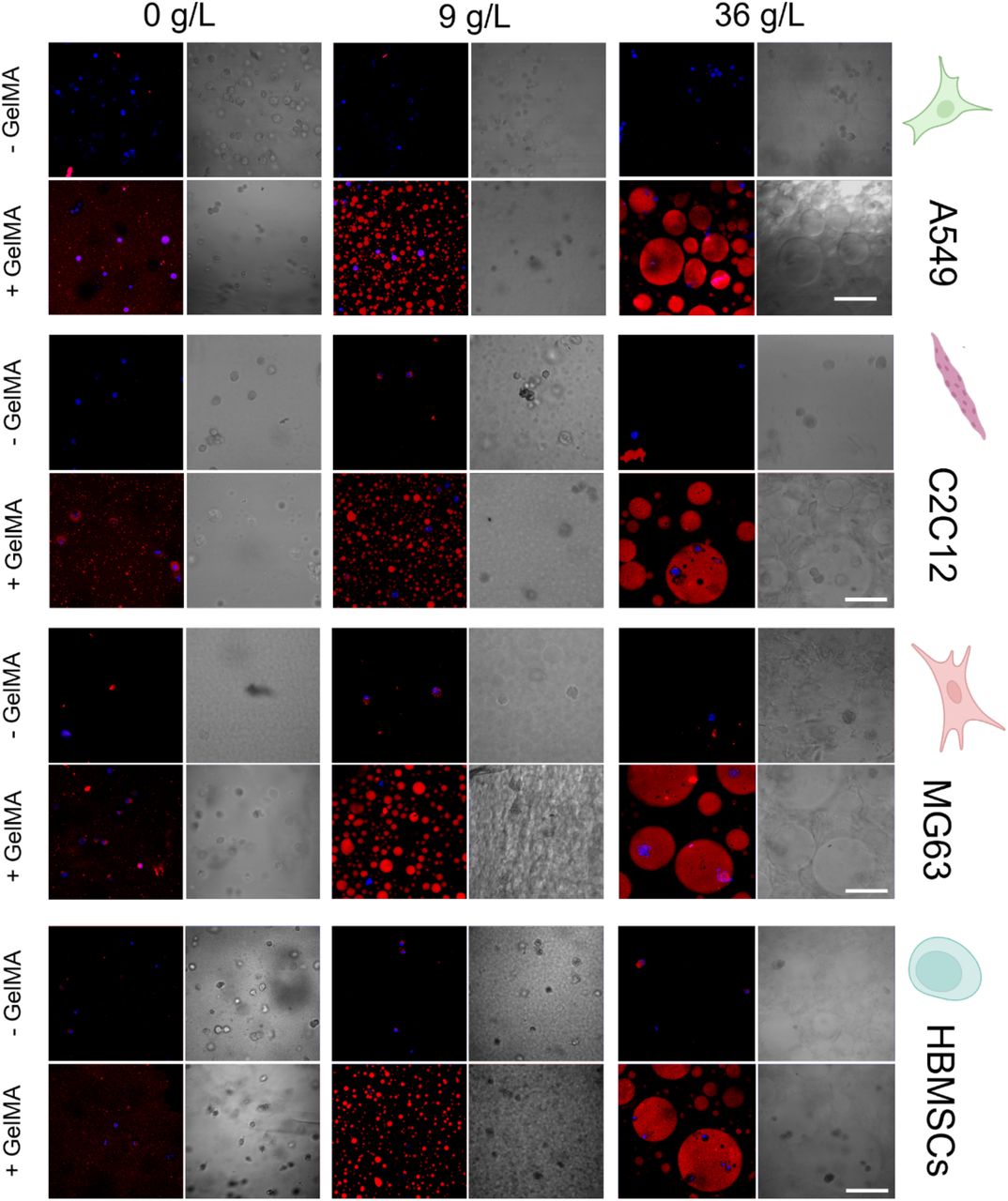
Partitioning of different cell types within the various ATPS scaffold formulations. Brightfield and confocal (merged) images representative of cells labelled with DAPI to show the nucleus (blue) of the different cell types (A549, C2C12, <t>MG63,</t> HBMSCs), and GelMA marked with rhodamine B to show the inner phase (red) of the scaffolds at 0 - 9 - 36 g/L. In all cell types, images were taken both under conditions where GelMA was not chemically cross-linked (-GelMA) and under conditions where GelMA was chemically cross-linked (+GelMA). Scale bars: (a, b, c, d) 100 μm. Mean ± S.D. n=3.
Mg63 Human Osteosarcoma Cell Line, supplied by ATCC, used in various techniques. Bioz Stars score: 98/100, based on 1 PubMed citations. ZERO BIAS - scores, article reviews, protocol conditions and more
https://www.bioz.com/result/mg63 human osteosarcoma cell line/product/ATCC
Average 98 stars, based on 1 article reviews
mg63 human osteosarcoma cell line - by Bioz Stars, 2026-05
98/100 stars
  Buy from Supplier

Image Search Results


Biological characterizations of DOX-MSNCaP@PLGA-collagen and PLGA-collagen constructs. The accumulate release of DOX from DOX-MSNCaP@PLGA-collagen in PBS buffer with different pH (A). Cytotoxic assessment of MG63 cells after being cultured in scaffolds via live and dead staining. Cells were seed in the meshes and incubated in DMEM at pH 7.4 or pH 6.5 (B). Fluorescence microscopic observation on the intracellular distribution of DOX in MG63 cells after incubation with DOX-MSNCaP@PLGA-collagen scaffolds for 12 hours. Cell nucleus was represented blue fluorescence; DOX was represented red fluorescence; actin cytoskeleton was represented green fluorescence (C). DNA laddering analysis on the severity of DNA fragmentation in MG63 cells upon treatment of DOX-MSNCaP@PLGA-collagen for 12 hours (I: PLGA-collagen at pH 7.4, II: DOX-MSNCaP@PLGA-collagen at pH 7.4, III: DOX-MSNCaP@PLGA-collagen at pH 6.5) (D).

Journal: RSC Advances

Article Title: Replicating the post-chemotherapy tumor microenvironment via biomimetic scaffolds to regulate MSC differentiation

doi: 10.1039/d6ra01031h

Figure Lengend Snippet: Biological characterizations of DOX-MSNCaP@PLGA-collagen and PLGA-collagen constructs. The accumulate release of DOX from DOX-MSNCaP@PLGA-collagen in PBS buffer with different pH (A). Cytotoxic assessment of MG63 cells after being cultured in scaffolds via live and dead staining. Cells were seed in the meshes and incubated in DMEM at pH 7.4 or pH 6.5 (B). Fluorescence microscopic observation on the intracellular distribution of DOX in MG63 cells after incubation with DOX-MSNCaP@PLGA-collagen scaffolds for 12 hours. Cell nucleus was represented blue fluorescence; DOX was represented red fluorescence; actin cytoskeleton was represented green fluorescence (C). DNA laddering analysis on the severity of DNA fragmentation in MG63 cells upon treatment of DOX-MSNCaP@PLGA-collagen for 12 hours (I: PLGA-collagen at pH 7.4, II: DOX-MSNCaP@PLGA-collagen at pH 7.4, III: DOX-MSNCaP@PLGA-collagen at pH 6.5) (D).

Article Snippet: Different types of cells were utilized in this work, including human bone marrow-derived mesenchymal stem cells (MSCs, passage 4) obtained from LONZA (MD, USA), and the human osteosarcoma cell line (MG63) purchased from Procell Life Science & Technology Co., Ltd (China; Catalog No. CL-0157).

Techniques: Construct, Cell Culture, Staining, Incubation, Fluorescence, DNA Laddering

BrdU staining of MG63 upon treatment of DOX-MSNCaP@PLGA-collagen at pH 7.4 or pH 6.5. Scale bar: 50 µm.

Journal: RSC Advances

Article Title: Replicating the post-chemotherapy tumor microenvironment via biomimetic scaffolds to regulate MSC differentiation

doi: 10.1039/d6ra01031h

Figure Lengend Snippet: BrdU staining of MG63 upon treatment of DOX-MSNCaP@PLGA-collagen at pH 7.4 or pH 6.5. Scale bar: 50 µm.

Article Snippet: Different types of cells were utilized in this work, including human bone marrow-derived mesenchymal stem cells (MSCs, passage 4) obtained from LONZA (MD, USA), and the human osteosarcoma cell line (MG63) purchased from Procell Life Science & Technology Co., Ltd (China; Catalog No. CL-0157).

Techniques: BrdU Staining

Representative 1 H NMR spectra of MG63 cell metabolites after being cultured on different types of PLLA. The cells were seeded on PLLA, PLLA-Cel, PLLA-Col, and PLLA-Cel-Col for 7 days. Peak assignments: 1 – lactic acid, 2 – 3-hydroxy- l -proline, 3 – glucosylgalactosylhydroxylysine, 4 – lysine, 5 – glucosylproline, 6 – pyruvic acid, 7 – succinic acid, 8 – α-ketoglutaric acid, 9 – proline, 10 – 5-hydroxylysine, 11 – oxaloacetic acid, 12 – acetyl-CoA, 13 – FADH 2 , 14 – 2-phosphoglyceric acid, 15 – cAMP, 16 – 3-phosphoglyceric acid, 17 – phosphoenolpyruvic acid, 18 – NADH. Unassigned peaks represent unknown compounds not in the HMDB database, residual solvent signals, or overlapping signals. The water signal region (4.6–5.0 ppm) was excluded from analysis to minimize interference.

Journal: RSC Advances

Article Title: The lysine degradation pathway analyzed with 1 H-NMR-targeted metabolomics of MG63 cells on poly( l -lactide)-based scaffolds

doi: 10.1039/d5ra05954b

Figure Lengend Snippet: Representative 1 H NMR spectra of MG63 cell metabolites after being cultured on different types of PLLA. The cells were seeded on PLLA, PLLA-Cel, PLLA-Col, and PLLA-Cel-Col for 7 days. Peak assignments: 1 – lactic acid, 2 – 3-hydroxy- l -proline, 3 – glucosylgalactosylhydroxylysine, 4 – lysine, 5 – glucosylproline, 6 – pyruvic acid, 7 – succinic acid, 8 – α-ketoglutaric acid, 9 – proline, 10 – 5-hydroxylysine, 11 – oxaloacetic acid, 12 – acetyl-CoA, 13 – FADH 2 , 14 – 2-phosphoglyceric acid, 15 – cAMP, 16 – 3-phosphoglyceric acid, 17 – phosphoenolpyruvic acid, 18 – NADH. Unassigned peaks represent unknown compounds not in the HMDB database, residual solvent signals, or overlapping signals. The water signal region (4.6–5.0 ppm) was excluded from analysis to minimize interference.

Article Snippet: The MG63 osteosarcoma cell line (ATCC CRL1427, USA) was cultured in a sterile NuncTM EasyFlaskTM 75 (Thermo Fisher Scientific, China) using DMEM (Gibco®, USA) enriched with 10% fetal bovine serum (FBS), 2% HEPES buffer, 1% MEM non-essential amino acids (NEAAs), and 1% PenStrep (Gibco®, USA).

Techniques: Cell Culture, Solvent

Multivariate analyses of metabolomic profiles of MG63 cells cultured on PLLA and its composites, including PLLA-Cel, PLLA-Col, and PLLA-Cel-Col, for 7 days. Each data point represents a sample, with colors indicating the scaffold type: (A) principal component analysis (PCA) scores plot and (B) partial least-squares discriminant analysis (PLS-DA) scores plot.

Journal: RSC Advances

Article Title: The lysine degradation pathway analyzed with 1 H-NMR-targeted metabolomics of MG63 cells on poly( l -lactide)-based scaffolds

doi: 10.1039/d5ra05954b

Figure Lengend Snippet: Multivariate analyses of metabolomic profiles of MG63 cells cultured on PLLA and its composites, including PLLA-Cel, PLLA-Col, and PLLA-Cel-Col, for 7 days. Each data point represents a sample, with colors indicating the scaffold type: (A) principal component analysis (PCA) scores plot and (B) partial least-squares discriminant analysis (PLS-DA) scores plot.

Article Snippet: The MG63 osteosarcoma cell line (ATCC CRL1427, USA) was cultured in a sterile NuncTM EasyFlaskTM 75 (Thermo Fisher Scientific, China) using DMEM (Gibco®, USA) enriched with 10% fetal bovine serum (FBS), 2% HEPES buffer, 1% MEM non-essential amino acids (NEAAs), and 1% PenStrep (Gibco®, USA).

Techniques: Cell Culture

Metabolic pathway enrichment analysis of MG63 cells cultured on PLLA, PLLA-Cel, PLLA-Col, and PLLA-Cel-Col for 7 days.

Journal: RSC Advances

Article Title: The lysine degradation pathway analyzed with 1 H-NMR-targeted metabolomics of MG63 cells on poly( l -lactide)-based scaffolds

doi: 10.1039/d5ra05954b

Figure Lengend Snippet: Metabolic pathway enrichment analysis of MG63 cells cultured on PLLA, PLLA-Cel, PLLA-Col, and PLLA-Cel-Col for 7 days.

Article Snippet: The MG63 osteosarcoma cell line (ATCC CRL1427, USA) was cultured in a sterile NuncTM EasyFlaskTM 75 (Thermo Fisher Scientific, China) using DMEM (Gibco®, USA) enriched with 10% fetal bovine serum (FBS), 2% HEPES buffer, 1% MEM non-essential amino acids (NEAAs), and 1% PenStrep (Gibco®, USA).

Techniques: Cell Culture

Effect of l -lysine concentration on total protein content in MG63 osteoblast-like cells.

Journal: RSC Advances

Article Title: The lysine degradation pathway analyzed with 1 H-NMR-targeted metabolomics of MG63 cells on poly( l -lactide)-based scaffolds

doi: 10.1039/d5ra05954b

Figure Lengend Snippet: Effect of l -lysine concentration on total protein content in MG63 osteoblast-like cells.

Article Snippet: The MG63 osteosarcoma cell line (ATCC CRL1427, USA) was cultured in a sterile NuncTM EasyFlaskTM 75 (Thermo Fisher Scientific, China) using DMEM (Gibco®, USA) enriched with 10% fetal bovine serum (FBS), 2% HEPES buffer, 1% MEM non-essential amino acids (NEAAs), and 1% PenStrep (Gibco®, USA).

Techniques: Concentration Assay

Selected metabolites in the lysine degradation pathway. (A) The initial steps of the lysine degradation pathway and (B) the metabolite concentrations from MG63 cells cultured on PLLA, PLLA-Cel, PLLA-Col, and PLLA-Cel-Col for 7 days. The bar graph illustrating the mean ± SD ( n = 3) of each metabolite concentration (μM) is derived from 1 H NMR metabolomic data. The paired bars indicate a comparison of means; (★) and (★★), and (★★★) indicate significant differences when p < 0.05, 0.01, and 0.001, respectively.

Journal: RSC Advances

Article Title: The lysine degradation pathway analyzed with 1 H-NMR-targeted metabolomics of MG63 cells on poly( l -lactide)-based scaffolds

doi: 10.1039/d5ra05954b

Figure Lengend Snippet: Selected metabolites in the lysine degradation pathway. (A) The initial steps of the lysine degradation pathway and (B) the metabolite concentrations from MG63 cells cultured on PLLA, PLLA-Cel, PLLA-Col, and PLLA-Cel-Col for 7 days. The bar graph illustrating the mean ± SD ( n = 3) of each metabolite concentration (μM) is derived from 1 H NMR metabolomic data. The paired bars indicate a comparison of means; (★) and (★★), and (★★★) indicate significant differences when p < 0.05, 0.01, and 0.001, respectively.

Article Snippet: The MG63 osteosarcoma cell line (ATCC CRL1427, USA) was cultured in a sterile NuncTM EasyFlaskTM 75 (Thermo Fisher Scientific, China) using DMEM (Gibco®, USA) enriched with 10% fetal bovine serum (FBS), 2% HEPES buffer, 1% MEM non-essential amino acids (NEAAs), and 1% PenStrep (Gibco®, USA).

Techniques: Cell Culture, Concentration Assay, Derivative Assay, Comparison

Cytotoxicity effect on MG63 ( a ) and BMSCs ( b ) after 24 h of exposure to the tested samples’ extracts, evaluated via the release of LDH enzyme. Complete growth media was used as a negative control, and lysed cells were used as a positive control. Results are expressed as mean ± standard deviation (n ≥ 3, independent samples).

Journal: Polymers

Article Title: Localized Combination Therapy Using Collagen–Hydroxyapatite Bone Grafts for Simultaneous Bone Cancer Inhibition and Tissue Regeneration

doi: 10.3390/polym17162239

Figure Lengend Snippet: Cytotoxicity effect on MG63 ( a ) and BMSCs ( b ) after 24 h of exposure to the tested samples’ extracts, evaluated via the release of LDH enzyme. Complete growth media was used as a negative control, and lysed cells were used as a positive control. Results are expressed as mean ± standard deviation (n ≥ 3, independent samples).

Article Snippet: For cell culture, human osteosarcoma cell line MG63 (ATCC CRL1427) was cultured in Dulbecco’s Modified Eagle’s Medium-DMEM supplemented with 1% non-essential amino acids, both from Sigma Aldrich, 10% fetal calf serum (FBS) from Thermo Fisher Scientific (Waltham, MA, USA), and 1% penicillin, streptomycin, and neomycin (all from Sigma Aldrich) at 37 °C with 5% CO 2 .

Techniques: Negative Control, Positive Control, Standard Deviation

Cellular viability of MG63 ( a ) and BMSCs ( b ) cultured with 100% extracts from each sample, for 1 day. Complete growth media was used as a control. The dashed line indicates the 70% cut-off for a toxic effect. Results are expressed as mean ± standard deviation (n ≥ 3, independent samples, * p < 0.05).

Journal: Polymers

Article Title: Localized Combination Therapy Using Collagen–Hydroxyapatite Bone Grafts for Simultaneous Bone Cancer Inhibition and Tissue Regeneration

doi: 10.3390/polym17162239

Figure Lengend Snippet: Cellular viability of MG63 ( a ) and BMSCs ( b ) cultured with 100% extracts from each sample, for 1 day. Complete growth media was used as a control. The dashed line indicates the 70% cut-off for a toxic effect. Results are expressed as mean ± standard deviation (n ≥ 3, independent samples, * p < 0.05).

Article Snippet: For cell culture, human osteosarcoma cell line MG63 (ATCC CRL1427) was cultured in Dulbecco’s Modified Eagle’s Medium-DMEM supplemented with 1% non-essential amino acids, both from Sigma Aldrich, 10% fetal calf serum (FBS) from Thermo Fisher Scientific (Waltham, MA, USA), and 1% penicillin, streptomycin, and neomycin (all from Sigma Aldrich) at 37 °C with 5% CO 2 .

Techniques: Cell Culture, Control, Standard Deviation

Cellular viability of MG63 ( a ) and BMSCs ( b ) cultured with 100% extracts from each sample for 3 days. Results are expressed as mean ± standard deviation (n ≥ 3; independent samples; * p < 0.05).

Journal: Polymers

Article Title: Localized Combination Therapy Using Collagen–Hydroxyapatite Bone Grafts for Simultaneous Bone Cancer Inhibition and Tissue Regeneration

doi: 10.3390/polym17162239

Figure Lengend Snippet: Cellular viability of MG63 ( a ) and BMSCs ( b ) cultured with 100% extracts from each sample for 3 days. Results are expressed as mean ± standard deviation (n ≥ 3; independent samples; * p < 0.05).

Article Snippet: For cell culture, human osteosarcoma cell line MG63 (ATCC CRL1427) was cultured in Dulbecco’s Modified Eagle’s Medium-DMEM supplemented with 1% non-essential amino acids, both from Sigma Aldrich, 10% fetal calf serum (FBS) from Thermo Fisher Scientific (Waltham, MA, USA), and 1% penicillin, streptomycin, and neomycin (all from Sigma Aldrich) at 37 °C with 5% CO 2 .

Techniques: Cell Culture, Standard Deviation

Effects of Sauc on cell death, apoptotic cell morphology, and migration in human osteosarcoma cells. (A, B) MG63 cells (A) and SJSA‐1 cells (B) were seeded in 96‐well plates and cultured with Sauc at the indicated concentrations for 24 h. The numerical values of cytotoxicity are presented as a bar graph normalized to those of the control. (C, D) MG63 cells (C) and SJSA‐1 cells (D) were seeded in six‐well plates and cultured with Sauc at the indicated concentrations for 24 h. The morphological changes were observed using the Olympus CKX53 inverted microscope. Scale bar: 200 µm. (E, F) After 24 h of Sauc treatment of MG63 cells (E) and SJSA‐1 cells (F), cell migration was assessed using the wound healing assay. The migration rate is presented as a bar graph. Scale bar: 200 µm. All values are expressed as mean ± SD of the results from three independent experiments. * Indicates a statistically significant difference, with p < 0.05 compared to the control.

Journal: Molecular Nutrition & Food Research

Article Title: Saucerneol Inhibits the Growth, Migration, and Invasion of Osteosarcoma Cells In Vitro and Prevents Metastasis‐Associated Osteolysis Ex Vivo

doi: 10.1002/mnfr.70187

Figure Lengend Snippet: Effects of Sauc on cell death, apoptotic cell morphology, and migration in human osteosarcoma cells. (A, B) MG63 cells (A) and SJSA‐1 cells (B) were seeded in 96‐well plates and cultured with Sauc at the indicated concentrations for 24 h. The numerical values of cytotoxicity are presented as a bar graph normalized to those of the control. (C, D) MG63 cells (C) and SJSA‐1 cells (D) were seeded in six‐well plates and cultured with Sauc at the indicated concentrations for 24 h. The morphological changes were observed using the Olympus CKX53 inverted microscope. Scale bar: 200 µm. (E, F) After 24 h of Sauc treatment of MG63 cells (E) and SJSA‐1 cells (F), cell migration was assessed using the wound healing assay. The migration rate is presented as a bar graph. Scale bar: 200 µm. All values are expressed as mean ± SD of the results from three independent experiments. * Indicates a statistically significant difference, with p < 0.05 compared to the control.

Article Snippet: Human osteosarcoma cell lines MG63 (#CRL‐1427) and SJSA‐1 (#CRL‐2098) were purchased from the American Type Culture Collection (ATCC, Manassas, VA, USA).

Techniques: Migration, Cell Culture, Control, Inverted Microscopy, Wound Healing Assay

Partitioning of different cell types within the various ATPS scaffold formulations. Brightfield and confocal (merged) images representative of cells labelled with DAPI to show the nucleus (blue) of the different cell types (A549, C2C12, MG63, HBMSCs), and GelMA marked with rhodamine B to show the inner phase (red) of the scaffolds at 0 - 9 - 36 g/L. In all cell types, images were taken both under conditions where GelMA was not chemically cross-linked (-GelMA) and under conditions where GelMA was chemically cross-linked (+GelMA). Scale bars: (a, b, c, d) 100 μm. Mean ± S.D. n=3.

Journal: bioRxiv

Article Title: Aqueous two-phase bioinks for discrete packing and compartmentalisation of 3D bioprinted cells

doi: 10.1101/2025.06.27.661968

Figure Lengend Snippet: Partitioning of different cell types within the various ATPS scaffold formulations. Brightfield and confocal (merged) images representative of cells labelled with DAPI to show the nucleus (blue) of the different cell types (A549, C2C12, MG63, HBMSCs), and GelMA marked with rhodamine B to show the inner phase (red) of the scaffolds at 0 - 9 - 36 g/L. In all cell types, images were taken both under conditions where GelMA was not chemically cross-linked (-GelMA) and under conditions where GelMA was chemically cross-linked (+GelMA). Scale bars: (a, b, c, d) 100 μm. Mean ± S.D. n=3.

Article Snippet: The A549 human lung carcinoma epithelial-like cell line, C2C12 mouse pre-myoblast cell line and MG63 human osteosarcoma cell line were obtained from ATCC (USA).

Techniques: